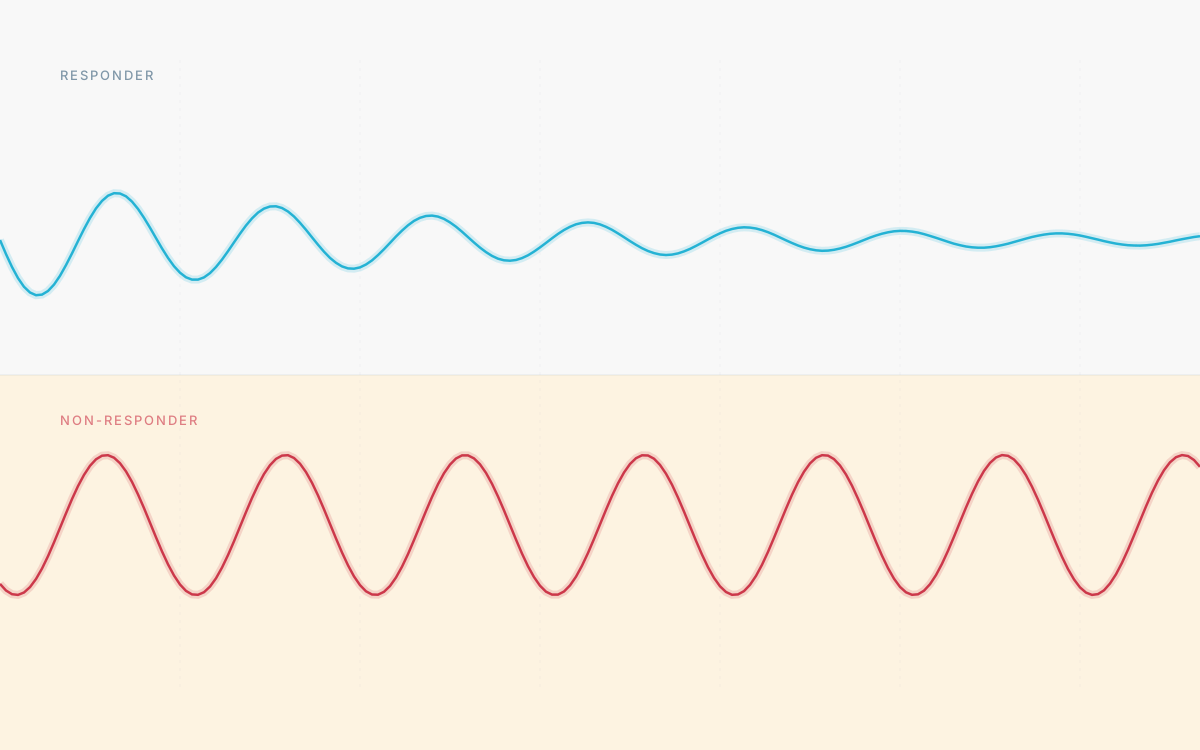
At Psyrin, we believe the future of mental health care lies in making every clinical moment more intelligent, more personalized, and more predictive. That belief is now driving a groundbreaking clinical study: we're investigating whether voice can help predict who responds to Transcranial Magnetic Stimulation (TMS) for depression, before treatment even begins.
This Psyrin-led initiative is being conducted in partnership with two leading mental health research organizations: Acacia Clinics and Fermata Health. Together, we're launching one of the first real-world trials exploring speech as a digital biomarker of TMS treatment response in patients with major depressive disorder.
Why This Matters
TMS is a transformative treatment for people with severe, treatment-resistant depression. But outcomes vary widely. Some patients respond dramatically, while others see little change. Right now, clinicians have no clear way of knowing who will benefit.
Speech contains rich, high-dimensional information about mood, cognition, energy, and affect. Psyrin's research asks a simple but powerful question: can we use speech to predict who will respond to TMS?
If so, the impact would be substantial. Providers could make faster, more informed decisions. Patients could avoid costly, time-intensive treatments that may not work for them. And behavioral health systems could deliver care with greater precision and efficiency.
How the Study Works
Participants diagnosed with major depressive disorder and referred for TMS are invited to contribute short speech samples throughout the course of their treatment. These samples are collected using Psyrin's proprietary technology platform, designed to capture linguistic, acoustic, and behavioral markers associated with treatment response.
The study will track how speech patterns change over time, and whether baseline vocal features can help predict who will improve with TMS. All data collection is non-invasive, privacy-preserving, and embedded into real-world clinical care.
Building the Evidence Base for AI in Psychiatry
Psyrin is committed to rigorous, clinically grounded science. This study reflects our core belief: AI should be validated in the settings where care actually happens. That's why we're partnering directly with innovative clinical sites to generate evidence that's real-world, reproducible, and directly actionable.
Join the Work
The study is actively recruiting participants in New York City and California. Adults ages 18 to 70 who are eligible for TMS treatment may qualify. Participation includes speech assessments and treatment monitoring, with full clinical oversight and compensation for involvement.
More details are available at ClinicalTrials.gov (NCT06823024).